


STATUS
Schematic Developement
TYPE
Residential
YEAR
2024
LOCATION
Taiwan Hsinchu County
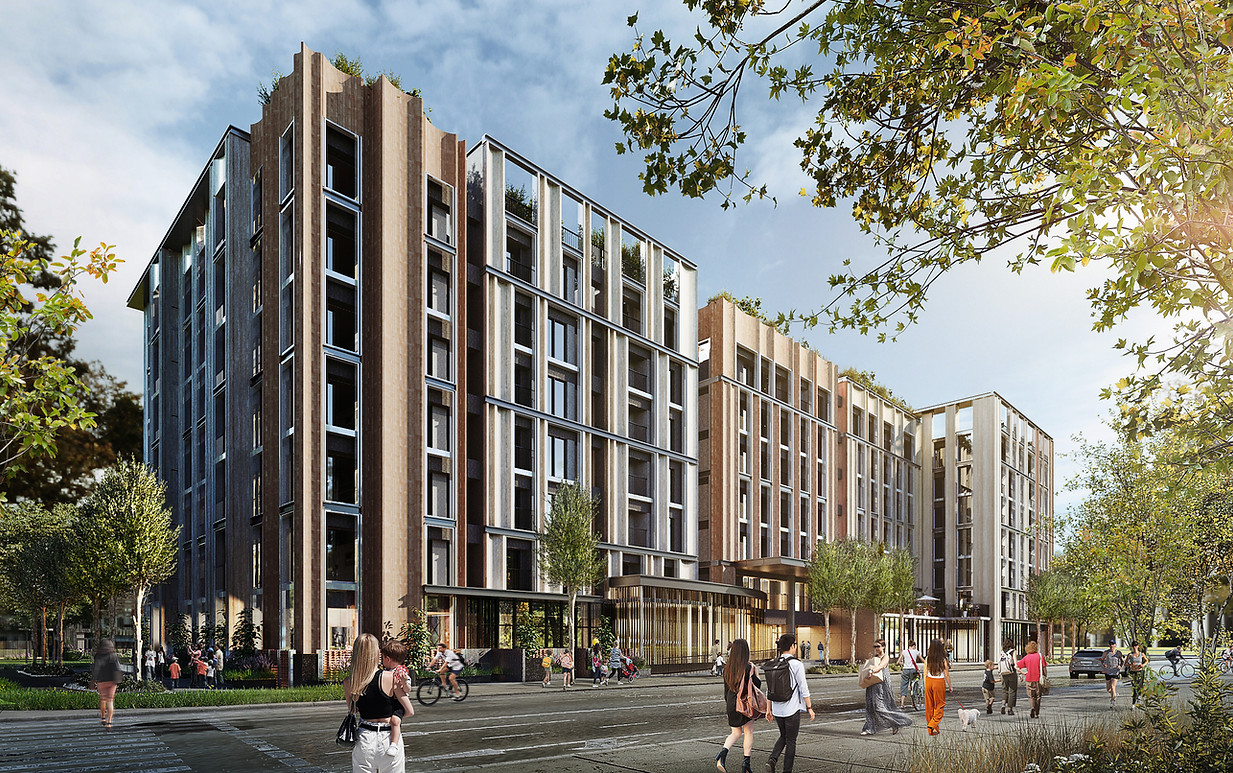
The project balances order and openness, tradition and modernity. Rectilinear brick volumes align with a strict grid, featuring recessed windows, metal frames, and pleated brick surfaces for a calm rhythm. Brick, concrete, and metal details create depth and texture. A sweeping curvilinear entrance contrasts the disciplined façades—fluid, transparent, and inviting, like a lantern revealed within masonry. The tripartite façade engages the street with transparency, structured mid-levels, and a refined parapet. Stepped terraces soften the roofline. This dialogue between geometry and gesture transforms the structure into a civic threshold—rooted in craft, open to community, and timeless in form.
TOTAL FLOOR AREA
23,991 m²
Read More>>


Innovation in this project emerges from its ability to fuse contrasting architectural languages into a coherent whole. The façades are disciplined, linear, and rectilinear — anchored by brick panels that serve as piers, speaking to tradition and tectonic order. In contrast, the entrance is boldly curvilinear—fluid, luminous, and welcoming. The dialogue between these gestures defines the project’s architectural identity.The entrance itself becomes an innovative spatial device. Rather than disrupting the continuity of the masonry grid, the curve appears to “slide” beneath the brick façade, as though the walls have been gently pulled open to reveal a contemporary heart. This creates a striking spatial and symbolic counterpoint: solidity frames transparency; permanence frames openness. By night, the glowing lobby becomes a civic lantern; by day, it reads as a pavilion open to the community.
Innovation also emerges in the façade detailing. Brick modules function not only as aesthetic elements but as environmental tools—shading the glazing and reducing heat gain. Metal picture frames align mullions with precision, lending the façade diagrammatic clarity. Crisp shadow gaps articulate every junction, ensuring that materials read as intentional rather than as afterthoughts.
Finally, the landscape introduces a layer of cultural innovation. Drawing inspiration from breezy rice paddies, the ground plane transforms memory into living patterns. Linear beds, soft mounds, and textured paving extend the building’s rhythm into the city while grounding it in local heritage. This integration of context, memory, and modern urban life exemplifies how innovation can be both technical and cultural.
